Special Perks for Special Healthcare Workers—Like You.
Take advantage of these special FREE resources now available to healthcare workers and first responders.
Companies across New York and across the country are stepping up to support health care workers who are on the frontlines of the fight against COVID-19. Please explore these resources. Thanks for your hard work. You deserve all the help you get!
Allbirds
Allbirds is donating shoes to the medical community. They’ve already given out $500,000 worth.
Email together@allbirds.com for your free pair of wool runners.
Krispy Kreme
Krispy Kreme is offering anyone in the medical community a dozen doughnuts, free of charge. Valid every Monday through May 11.
“Just go to a Krispy Kreme drive-thru and show us your employer badge. That’s it,” the company said. “Pick up some free dozens on the way to work for you and your colleagues, or maybe a free dozen on your way home to family after a long shift.”
Sweetgreen
Sweetgreen is delivering free salads and bowls to hospital workers.
Hertz Car Rentals
Hertz is offering NYC healthcare workers a free rental car, up to 1 month!
Starbucks Coffee
A free tall hot or iced brewed coffee to anyone that identifies themselves as a COVID-19 front line responder through May 3rd.
Uber Eats
Uber Eats has pledged to give 300,000 free meals to first responders and health care workers.
Four Seasons Hotel
The Four Seasons Hotel on 57th Street will provide FREE lodging to doctors, nurses & medical personnel currently working to respond to the pandemic.
The hotel, like many, is closed due to COVID-19 until 4/15. But healthcare workers can call the hotel at 212-758-5700 to book a free room.
Crocs Shoes
Get a free pair of crocs to help you, while you help us alot.
AirBnb
Providing health care professionals, relief workers and first responders free or subsidized housing.
Childcare
Westchester Childcare
All school districts in Westchester County are now providing childcare for children ages 5 to 12 for healthcare workers and first responders with no other childcare options.
New York City Childcare
Regional Enrichment Centers—places where the children of front-line workers can be safely cared for while their parents continue to serve the city in this time of need.
Long Island Childcare
Emergency childcare is available for residents of Nassau and Suffolk County.
For more special perks and discounts, click here.
How to use Facetime to talk to friends and loves ones
How to use Facetime to talk to friends and loves ones
Available to iPhone and iPad users
- In the Facetime app, tap the plus button and type the person’s phone number or email address.
- Tap the number or address, then tap Audio or Video.
- If you have the person’s phone number or email address saved in your contacts, you can start typing their name and tap the name when it appears.
Once you have made the call, the next time you open the app, their name will appear when you open the app. Simply tap on their name.
How to use WhatsApp to talk to your loved ones
How to use Whatsapp to talk to your loved ones
Simple:
- Install Whatsapp on your phone.
- Tap on Whatsapp.
- Tap on the contact you want to call.
- Tap on the movie camera icon.
- You’re on!
How to use Skype to talk to friends and loved ones
How to use Skype to talk to friends and loved ones.
- Check for a webcam.Be sure your computer has a webcam. On most laptops, the webcam will look like a small hole in the top border of the screen.
- Install Skype.Depending on whether or not you have a Mac or a PC, the download link is different.
- For Windows users:Go to this link: http://www.skype.com/en/download-skype/skype-for-computer/. Click on the green button that says, “Get Skype for Windows Desktop.”
- For Mac users:Go to this link: http://www.skype.com/en/download-skype/skype-for-mac/. Click on the green button that says, “Get Skype for Mac.”
- Follow installer instructions.The Skype download should start automatically and the installer will guide you through how to install the program.
- Open Skype.After the program is finished installing, open up Skype. If you have trouble finding the program, follow these instructions for Mac or PC.
- For Windows users:Press your Windows key (left of Alt key), type “Skype” and press ↵ Enter.
- For Mac users:Open up Finder, search for “Skype,” then click on the program
- Click on a contact.In the left side of your screen, you will see a list of contacts if you have added any. Click on the name to open up a conversation with that person.
- If you haven’t added any contacts, you will first have to add at least one. Ask for a friend’s Skype ID, click Contacts in the upper left of the window, click Add Contact in the dropdown menu, then type your friend’s Skype ID.
- Start a video call.To start a video call, you must first be in a conversation with a contact. The instructions are slightly different for Mac and PC users.
- For Windows users:Click on the icon in the upper right corner of the window that looks like a video camera. It should be a blue circle with a white video camera inside.
- For Mac users:Click on the icon in the upper right corner of the window that looks like a video camera. It should be a green circle with a white video camera inside. Depending on your version of Skype, the icon may instead simply say, “Video Call.”
- You may be asked for permission for Skype to use your video camera, click “Allow” if you are comfortable with Skype having access to your camera.
- End the call when done.End the call by pressing the red button on the bottom of the video call window. The icon looks like a red circle with a white phone inside of the circle.
- You may need to move your cursor around the inside of the video call window to reveal the hang-up button.
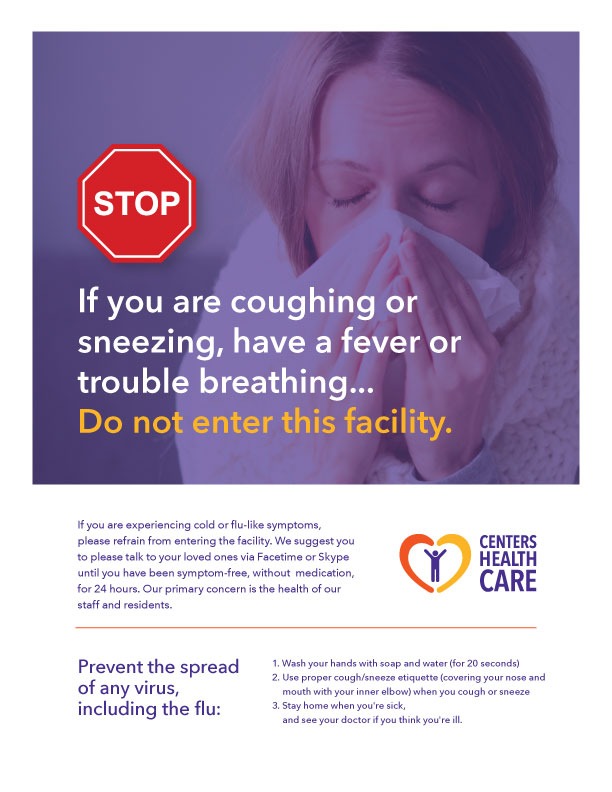
Coronavirus Notice:
Bronx Center Explains Why Elderly Bruise More Easily
The very mention of a bruise might make us cringe, so it’s no surprise that catching a glimpse of an unsightly one on the hand or arm of an elderly loved one may cause us a bit of concern. At the Bronx Center for Rehabilitation and Nursing, we do all that we can to avoid and account for bruising on our residents, but the truth is that nature and time are against us. Unlike with younger people, it doesn’t take much force to break a blood vessel under the skin of an aging person, and the results are often much more visible when it happens. We find that better understanding the reasons for this often puts our minds more at ease.
As people age, the cells in their skin divide more slowly, and the skin begins to thin. It also retains less moisture, and both of these factors result in less protection from external force for the fragile blood vessels underneath. Routine bumps and pressures that we may not even register in our younger daily lives may now become causes of bruising. While we’re careful to be extra vigilant toward dangers to the aging, anyone is capable of accidentally bumping an arm or hand against a hard surface from time to time.
Bruising on the elderly frequently looks more severe than what we’re used to seeing in younger people. Thinned, drier skin is more translucent, giving us a better glimpse of what’s going on below the surface. Medications may complicate the issue by thinning the blood, which allows for increased bleeding and causes bruises to look larger and darker. Blood that does clot or partially clot may result in a hematoma.
While ideally it would be nice to avoid all bruising entirely, the more realistic approach is to accept that a small amount of bruising may occasionally occur and to try to avoid it whenever possible. Warm, soft clothing can be protective for aging skin, and proper positioning can help decrease pressure-related bruises. The greatest prevention measures are planning and caution. Try to devise mobility strategies for avoiding falls, and be wary of activities that involve even small amounts of impact.
Bronx Center Considers Upcoming Presidential Representation for the Elderly
The Democratic primary debates for the 2020 election have already begun, and our nation’s elderly population is facing an unprecedented situation that includes a number of historic firsts related to their age. Never before has the largest voting demographic in the country been its generation of retired and senior citizens like our patients at the Bronx Center for Rehabilitation and Nursing. This has allowed the Baby Boom generation the level of superior political power that they’ve never been without and that’s never been enjoyed by the generations immediately before or immediately after them.
By either result or coincidence, this comes at the same time that the upcoming presidential race is experiencing an unprecedented phenomenon. President Donald Trump, who is currently 72 years old, was the oldest President ever elected in the United States. That may seem like an anomaly until we consider that three of the four current leaders among Democratic primary candidates are also all over 70 years old. Obviously, the election of any of those three or the reelection of President Trump would set a new high water mark for the oldest President elected.
Their voting power and the potential election of a President their own age may set the stage for a focus on senior-related issues on a level heretofore unseen. The race is barely in its infant stages, and already Medicare, universal medicine, and prescription drug costs are some of the hottest topics of conversation. This shift is arguably justified, as the nation is currently facing the approach of a historically large elderly population that’s living longer and with more medical assistance than ever before.
In the long run, this is perhaps the political shot in the arm the country needs in order to advance elder care and issues that specifically affect the aging. The generation behind the Baby Boomers, called Generation X, is smaller than the upcoming Millennial generation, meaning that in a few decades voting power will once again leave the hands of the retired generation and return to the control of middle-aged adults. If attention to elder issues isn’t maximized in the near future, it may be a number of decades before those issues attract this level of attention again.
Parkinson’s Disease 101 – What is Parkinson’s Disease and how can it be treated?
Today, April 11th is World Parkinson’s Day. British doctor James Parkinson first discovered Parkinson’s disease exactly 200 years ago in 1817. He published an article titled “Essay on the Shaking Palsy” that described the symptoms of the disease that would be named after him. Sadly, Dr. Parkinson was not able to discern an exact cause or a cure the disease, a question that scientists and doctors are still trying to find answers for 200 years later. Some researchers believe that Parkinson’s is genetic like other diseases. Other researchers believe that Parkinson’s may have been caused by a viral infection or an adverse reaction to environmental toxins like pesticides.
Parkinson’s disease affects millions worldwide, impacting mostly the elderly but younger people could still experience symptoms. Famous examples of those that suffer from Parkinson’s disease include actor Michael J. Fox, who had experienced symptoms of early-onset Parkinson’s when he was only in his early 30s, and the late Muhammad Ali, who was diagnosed with Parkinson’s when he was in his 40s due to the repeated blows to the head he experienced throughout his boxing career.
This disease causes irreversible brain cell loss and damage to the central nervous system. The result of this degenerative condition is that less dopamine is produced and the striatum, one of the areas of the brain that coordinates movement, is unable to function properly. Those that suffer from Parkinson’s experience symptoms such as tremors, stiffness, imbalance, and slow movement.
Because there is no cure for Parkinson’s disease, the best way to prevent it from taking over you or your loved one’s life is through treatment. Most treatment options involve restoring the imbalance of neurotransmitters and regulate nervous system operation so your body won’t be making movements against your will. There are several prescription medications that can correct this chemical imbalance. However, if medication is not enough to control symptoms, there are a few surgical procedures that can be an option.
Hopefully one day, we can find a cure for Parkinson’s disease so that surgery or an extensive regime of medication will no longer be necessary for those that have the disease and would like free control over their bodies once more.
4 Super Simple Ways to Improve Your Memory
Memory loss is a scary concept. Imagine waking up one day not knowing who you are and trying to figure out your “past” life. Now what if you didn’t have to face the pain of forgetting a precious memory? If you fall victim to a neurological ailment, memory loss may be inevitable. But it can be preventable. Here are 4 very simple things you can do today to preserve your memory tomorrow and the days to come:
1. Diet – Be mindful of what you eat and your mind will thank you for it. If your diet mainly consists of high-calorie, processed foods, it will impact not just your memory but also your entire body. Take a look at our previous post in which we go through five of the best foods you can eat for your brain.
2. Get in the habit of writing things down – Try as you like, there’s only so much you can remember in a given moment. Having a to-do list, whether it’s through a mobile app or a handwritten planner can keep you on track. Extra activity keeps your brain engaged and electrified, and an active brain has a strong memory.
3. Catch more Z’s – Insomnia or other sleep disorders aside, sleep is so essential to our health. If you don’t have a diagnosed sleep disorder and you have trouble sleeping, check out our blog post where we go over 6 common reasons why you may have trouble sleeping. As we sleep, our brain stores short-term memories as long-term memories. If we don’t get enough sleep, our memories won’t be as sharp.
4. Brain games – Numerous scientific studies have been conducted on brain games and what kind of role they play in improving memory and overall brain health. These studies have concluded that brain games, or any other kind of activity that encourages mental stimulation like a puzzle or video game, keeps the brain sharp. Think of the brain as a muscle and these games as barbells. Don’t be afraid to lift heavy for a strong brain and if you don’t use it, you lose it!
These are but a few methods you can easily implement to keep your brain sharp and memories intact.
5 MORE Ways to Conquer your Stress Once and For All
At some point in our lives, we will experience some kind of stress. Whether it’s stress from not getting a good night’s sleep to the stress of juggling 15 different things at work, there’s no escape from stress. If stress is left unchecked, it can wreak havoc on our health and productivity. In fact, stress has been associated with physical problems like a weakened immune system, stomachaches, high blood pressure, hair loss, and headaches. So what can you do to combat stress? Here are 5 MORE ways to eliminate your stress (on top of the 6 techniques we’ve outlined in a previous post):
1. Socialize – Loneliness can be deadly, which is why the elderly is more likely to get depression than other generations. Get in touch with old friends or volunteer at a local non-profit to connect with other people, share a laugh or two, and feel your stress melt away with each smile.
2. Switch to decaf – Caffeine can be a natural anxiety booster. It gets the energy and emotions flowing and can really increase stress. Most people need a little caffeine to get them going in the morning, but after lunch the caffeine isn’t usually necessary. Consider switching your afternoon coffee to decaf. That way, you aren’t adding caffeine to potentially stressful situations, which is like adding gasoline to a fire.
3. Take a breather – Can you think of anything more rejuvenating than a little rest and relaxation? Don’t be afraid to take a break every once in a while!
4. Unplug – sometimes we just need a digital detox. The never-ending deluge of notifications from our computer and mobile devices can be exhausting to go through. So consider “unplugging” afternoon or evening each week. Take off your phone, sign out of your email, and logoff of messaging platforms. Allow yourself a quiet time of day to tackle your life with no distractions.
5. Don’t skip meals or eat unhealthy– If we’re overloaded with several tasks to check off, we might end up being too busy to eat something. Skipping meals is never okay, and eating junk food full of grease and sugar doesn’t help either. Eating healthier snacks like veggies gives you a much better energy boost than chips or donuts.
Stress is a challenge everyone faces every day, but it doesn’t have to control you. Take control of your stress and tackle it head on with these techniques. Your body will thank you later.